
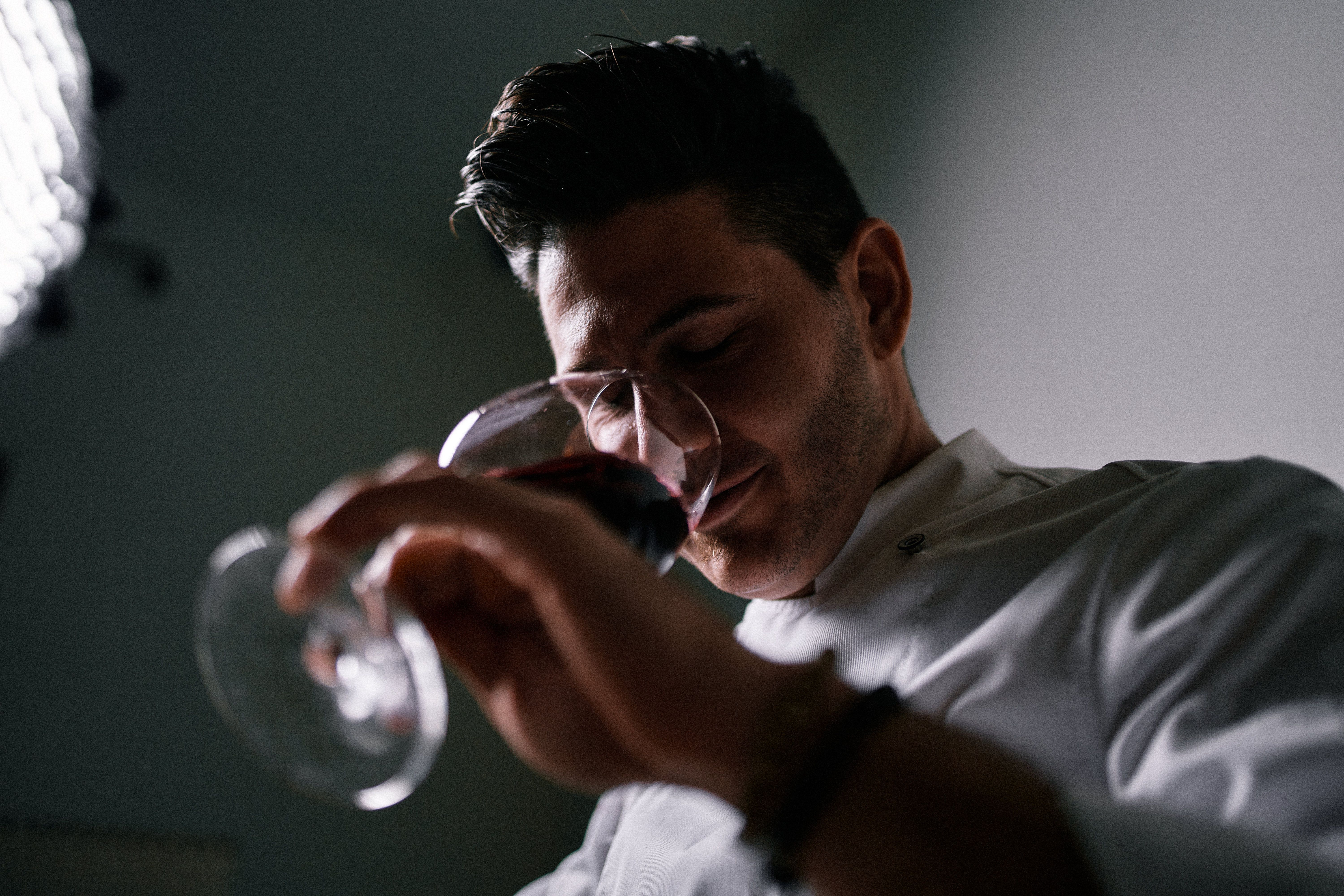
Everybody has an opinion about whether expensive wine is worth it, and most of the opinions are held with more conviction than evidence. The honest answer is more interesting than either "you're paying for the label" or "you get what you pay for."
Price and quality in wine are related, but the relationship is loose, and it changes shape dramatically depending on where you are on the scale.
Where the money goes at the bottom
Start with a five pound bottle in a market with significant alcohol duty and sales tax. Once you've deducted duty, tax, the retailer's margin, the distributor's margin, the bottle, the cork, the label, and shipping, the amount left for the actual liquid is somewhere between fifty pence and a pound.
You cannot make good wine for a pound. You can make clean, technically correct, inoffensive wine, and modern winemaking is extremely good at that. But grapes from low-yield vineyards, careful selection, time in barrel, extended ageing — none of that is available at that price.
Now move to a fifteen pound bottle. The fixed costs — duty, glass, shipping — are roughly the same in absolute terms. So the liquid budget has gone from about one pound to about five or six. That's a fivefold increase in what can be spent on grapes and winemaking, from a threefold increase in shelf price.
This is the key structural fact and it's why the biggest quality jump in wine happens between about eight and twenty pounds. You're not tripling the quality — you're multiplying the part of the price that actually buys wine.
What that money buys, concretely
Better fruit. Vineyards with lower yields produce more concentrated grapes. Lower yields mean less wine per hectare, which means higher cost per bottle. This is the largest single driver of quality and cost.
Selection. Discarding underripe or damaged fruit costs money in lost volume. Cheap wine uses everything.
Time. Wine sitting in a cellar for two years is capital tied up, plus storage, plus evaporation losses. Ageing is genuinely expensive.
Oak. A new French oak barrel costs a substantial sum and flavours only a few hundred bottles before it's neutral. Wines aged in new oak carry a real cost that alternatives like oak chips don't.
Site. Vineyard land in prestigious appellations costs enormous amounts, and that has to be amortised into every bottle.
Where it stops working
Above roughly fifty pounds, the relationship between price and drinking pleasure weakens sharply, and above a couple of hundred it more or less breaks.
Several things are being priced at that level that aren't quality in any straightforward sense. Scarcity — a producer making three thousand bottles a year with global demand will command a price unrelated to production cost. Reputation and critical scores, which have an enormous multiplier effect on price. Investment demand, where buyers aren't planning to drink it. And straightforward luxury positioning.
Blind tasting studies consistently find that untrained tasters show little or no correlation between price and enjoyment, and that even experienced tasters' preferences correlate with price only weakly once labels are hidden. That's a well-replicated finding and it should be taken seriously without being overinterpreted.
The overinterpretation warning
Those studies get quoted as proof that expensive wine is a con, and that's not quite right either.
The differences at the top end are real but they're subtle and they're mostly about complexity and development rather than immediate deliciousness. A great mature Burgundy does something that a fifteen pound Pinot Noir cannot do — it changes in the glass over an hour, it has layers that reveal themselves sequentially, it has a length of finish that's genuinely different.
Whether that's worth a large multiple is a personal question about how much you value that specific experience. But it isn't nothing, and the people who pay for it aren't all deluded.
The honest framing is that above a certain point you're buying diminishing returns on a real thing, at rapidly increasing cost, plus a large amount of scarcity value that has nothing to do with the liquid.
The value sweet spot
If you want the most drinking quality per unit of money, a few practical rules that have served me well.
Buy from unfashionable regions. The same quality of winemaking costs far less in a region without a famous name. Land is cheaper, demand is lower, and nobody is paying for the appellation.
Buy the second wine of a good producer rather than the top bottling of a mediocre one. Winemaking skill and vineyard access carry across the range.
Avoid the most famous grape varieties. There's a premium attached to recognisable names, and equivalent quality in a variety nobody's heard of costs meaningfully less.
Be sceptical of anything between five and eight pounds. That's the range where the liquid budget is minimal but the marketing budget isn't.
The thing worth remembering
Context affects enjoyment more than price does, by a considerable margin, and this is measurable. The same wine tastes better with good food, in good company, when you're relaxed, and when you've been told it's good.
That last one is uncomfortable and it's well established. Expectation genuinely changes perceived taste, not just reported taste — brain imaging studies have found differences in activity when subjects believe they're drinking something expensive.
Which means that some of the pleasure of an expensive bottle is real pleasure created by the price. That's not fraud, it's how perception works. But it's worth knowing when you're deciding what to spend.