
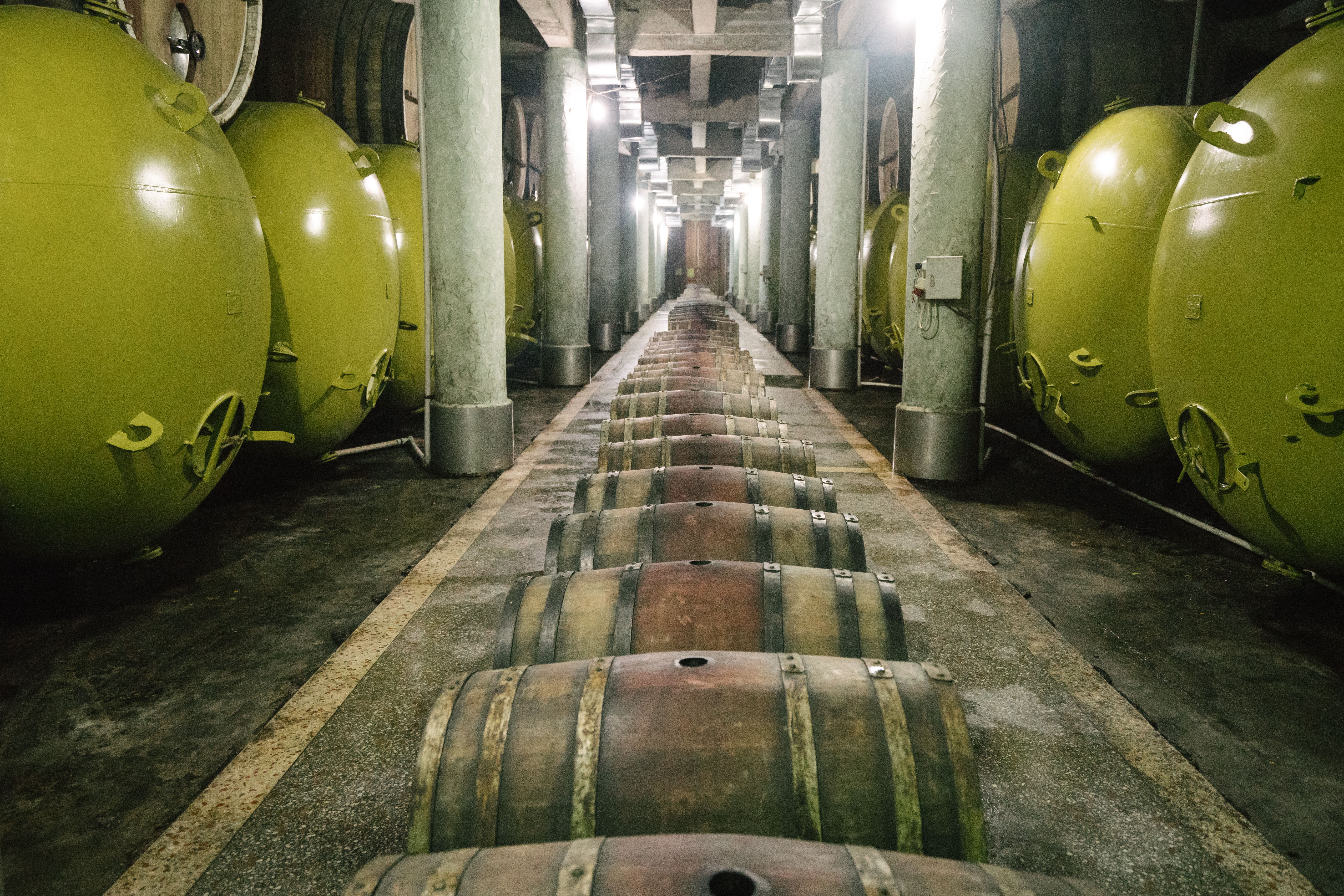
Winery visits cluster around harvest, which is the least representative period in the working year. The months either side account for most of the labour and nearly all of the decisions.
Winter is when the wine is monitored
Barrels and tanks are checked continually through winter for temperature, for the progress of any remaining conversions and for early signs of fault. Problems caught in December are fixable; the same problem in April often is not.
Topping up barrels is a routine task, since wine evaporates steadily through the wood. The headspace left behind admits oxygen, and an untopped barrel oxidises quickly.
Racking, meaning moving wine off its sediment into a clean vessel, happens on a schedule set by how the wine is developing rather than by the calendar.
Blending trials decide what the wines will be
Lots from different parcels, vessels and pressings are kept separate through early ageing, which leaves dozens of components to assemble.
Trial blends are made in small measured quantities and tasted repeatedly over weeks, since a blend that shows well on the first day may not hold.
The decision determines which lots go into the top wine and which are declassified, and it fixes the volume and therefore the revenue of each label.
The vineyard is being rebuilt while dormant
Pruning takes place across the coldest months and sets the yield and shape of the coming season more decisively than anything done later.
It is slow, skilled and unavoidably manual, and in a large vineyard it occupies the whole team for months.
Replanting, trellis repair and drainage work also happen while the vines are dormant, since none of it can be done around a growing canopy.
Equipment gets repaired before it is needed
Presses, pumps, crushers and cooling systems are stripped and serviced in the quiet months, because a failure during harvest cannot be tolerated.
Barrels are inspected, and a proportion are replaced each year on a rotation that determines how much new oak influence the wines receive.
Tanks are cleaned thoroughly, which is a larger job than it sounds and one where shortcuts create the microbial problems that appear a year later.
Bottling and paperwork fill the spring
Bottling is scheduled for a settled period when the wine is stable and the cellar has space, and it requires the building to be effectively shut down around it.
Labelling approvals, appellation submissions and export documentation all have to be completed in advance of any shipment.
None of this is visible to a visitor, and all of it determines whether the wine reaches anyone at all.