
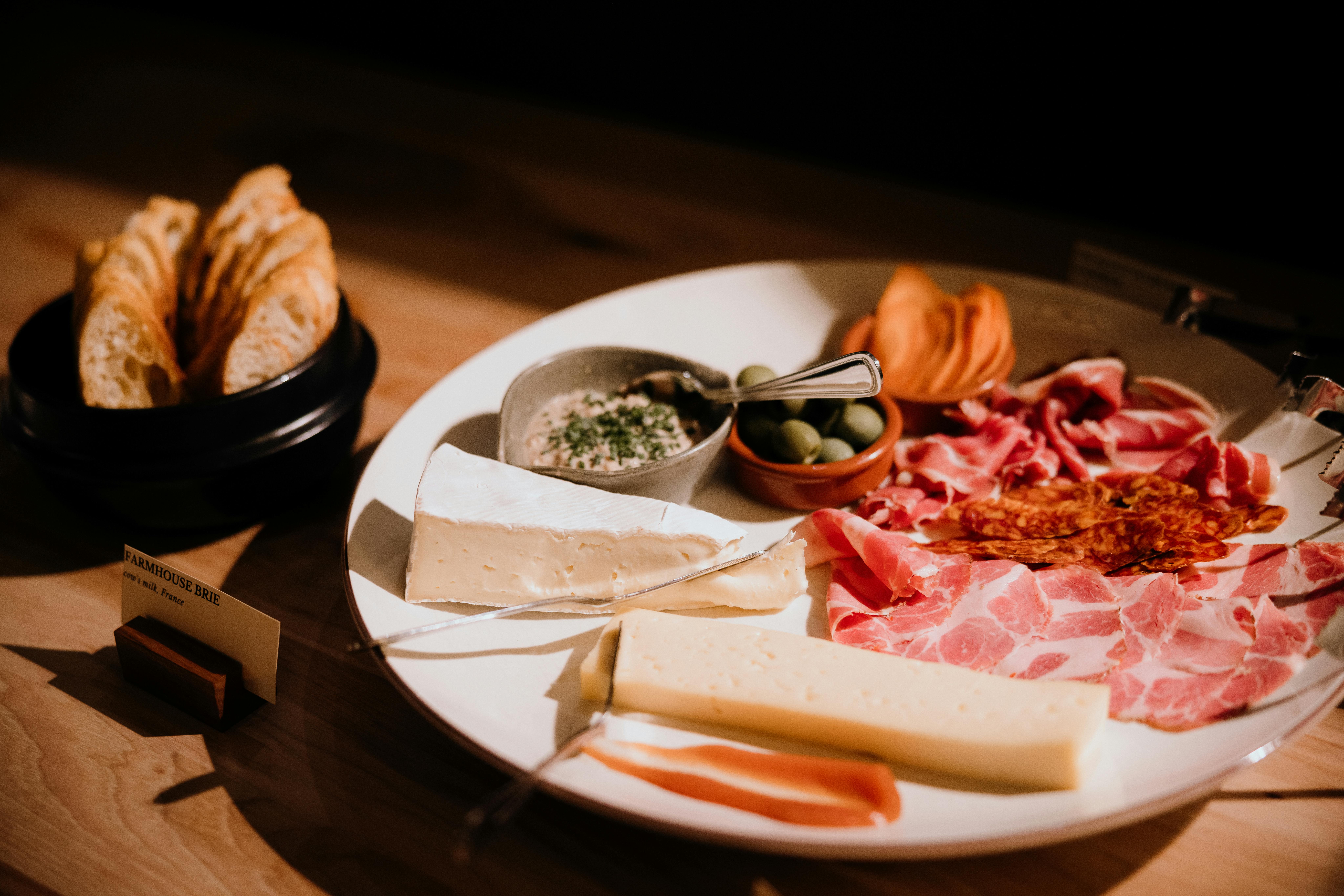
Some pairings collapse without either item being at fault, and the flavours involved seem compatible on paper. Savoury intensity is frequently the hidden cause.
Umami works against wine specifically
The savoury taste produced by glutamates and related compounds increases the perception of bitterness and astringency in whatever accompanies it. The amplification is substantial rather than marginal.
At the same time it suppresses perceived sweetness and fruit, removing exactly the elements that would have balanced those harsher characteristics. The wine loses on both sides at once.
A tannic red beside a strongly savoury dish therefore tastes harder and less fruity than the same wine tasted alone. Nothing about the wine changed.
Where the intensity concentrates
Aged and cured ingredients accumulate savoury compounds as their proteins break down, which is why matured cheeses and cured meats are so potent. Time in storage builds the concentration.
Mushrooms, tomatoes, fermented sauces and long-cooked stocks all carry it in quantity, and combining several multiplies the effect. Most difficult dishes contain three or four such ingredients together.
Asparagus and artichoke pose a related problem through different compounds, one of which makes anything tasted afterwards seem sweet and slightly metallic.
Salt is the standard correction
Salt counteracts the effect substantially, reducing the amplification of bitterness and restoring some balance to the wine.
This is why savoury dishes traditionally arrive well seasoned, and why an underseasoned version of the same dish is much harder to pair.
Acidity in the dish helps for the same reason, which is the practical logic behind serving vinegar or citrus alongside rich savoury preparations.
Choosing the wine around it
Wines with lower tannin have less for the savoury character to amplify, which makes them safer against these dishes.
Wines with pronounced fruit have more to lose but also more in reserve, and ripe styles often survive better than austere ones.
Some wines carry savoury character themselves, developed through age or oxidative handling, and these tend to meet such dishes on their own terms.
Why this explains cheese and red wine
The convention of serving red wine with cheese works less reliably than its popularity suggests, and savoury intensity is the reason.
Hard aged cheeses carry high savoury concentration alongside salt and fat, producing a complicated set of simultaneous effects.
White wines with high acidity frequently perform better, which is a conclusion drinkers reach experimentally long before anyone explains the chemistry to them.