
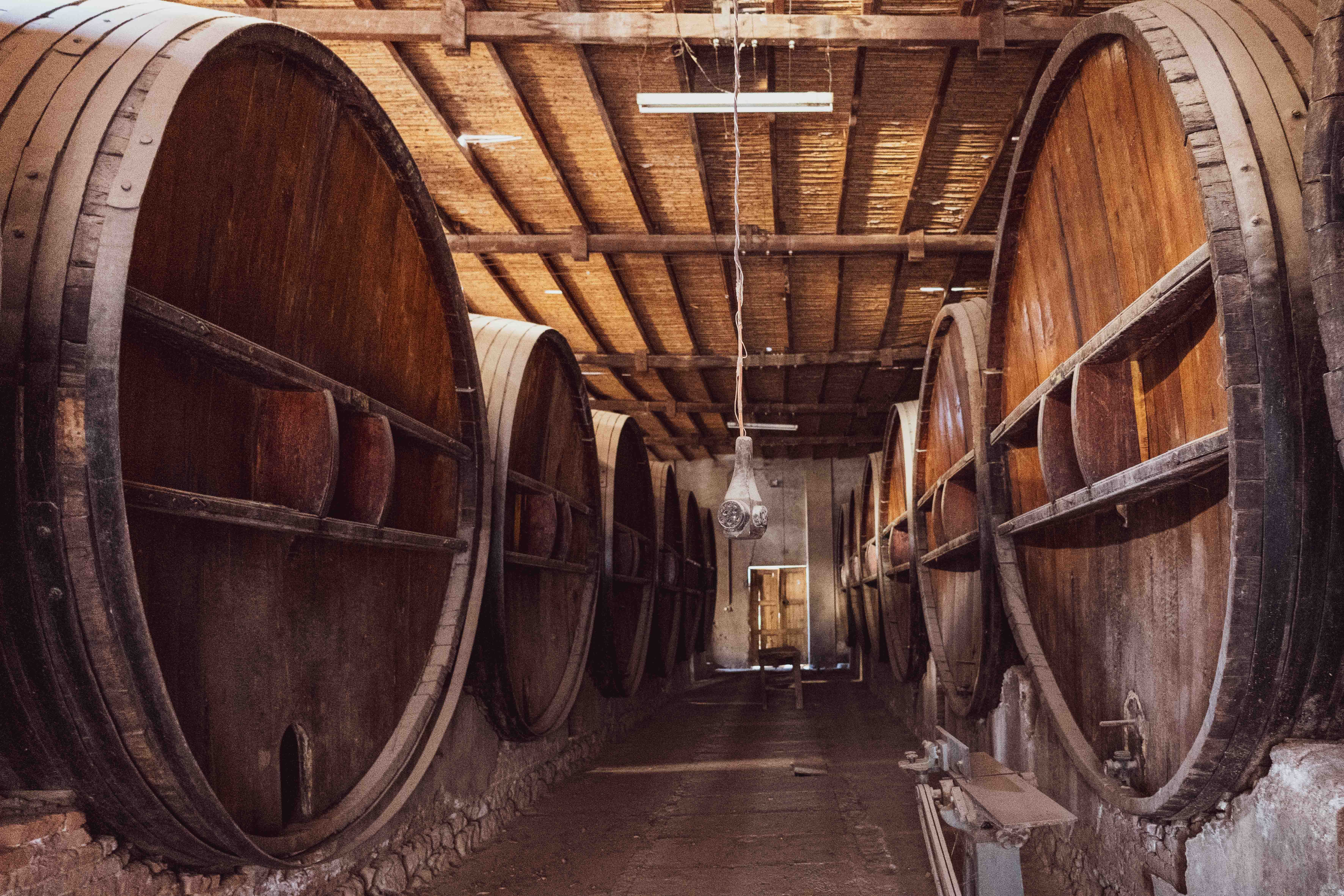
There's a romantic assumption that the best wine comes from a family who farm their own vines, and that anything made by a larger company buying in fruit is inferior.
It's more complicated than that, and knowing how to read who actually made a bottle is a genuinely useful skill.
The models
Estate or domaine. The producer owns or farms the vineyards, harvests the grapes, and makes the wine. Full control from soil to bottle. In French terms, look for "mis en bouteille au château" or "au domaine."
Négociant. A merchant who buys grapes, or juice, or finished wine, and blends, ages and bottles it under their own name. Historically the dominant model in several regions and still enormously important.
Cooperative. Growers pool their fruit and a shared facility makes the wine. Common across southern Europe and responsible for an enormous share of production.
Micro-négociant. A newer hybrid — small operators buying carefully selected fruit from specific growers, often making tiny quantities with the same attention as an estate. Increasingly significant in Burgundy in particular.
The case for estates
The real advantage is control at the decision points that matter most, and most of them happen in the vineyard.
When to pick is the single most consequential decision in winemaking, and it can't be delegated. An estate picks when its own fruit is ready. A négociant buying grapes is dependent on the grower's judgement, and growers paid by weight have an incentive to pick later and heavier.
Farming decisions across the year — pruning severity, canopy management, whether to green harvest to reduce yields — all affect quality and all cost the grower money. An estate absorbs that cost knowingly. A grower selling fruit at a fixed price per kilo has no incentive to reduce their yield.
These incentive problems are real and they explain most of the quality gap where one exists.
The case for négociants
But the model has genuine advantages too and it's not just a compromise.
Access to sites. In fragmented regions, no single owner has enough land in enough places. A négociant can assemble fruit from a range of vineyards that no individual estate could own.
Blending across sites. A blend from several parcels can be more consistent and sometimes better than any single component, particularly in difficult vintages.
Scale in the cellar. Good equipment is expensive. A négociant handling large volumes can afford temperature control, sorting technology and cooperage that a small grower cannot.
Vintage flexibility. In a poor year, a négociant can simply buy less and be selective. An estate has to do something with whatever its own vineyards produced.
The best négociant houses in Burgundy, Champagne and the Rhône produce wine at the highest level, and pretending otherwise is snobbery rather than analysis.
Contracts change everything
The important variable within the négociant model is the relationship with growers.
A négociant buying on the spot market at the last minute gets whatever's available. One with long-term contracts, who pays per hectare rather than per kilo, who specifies farming practices and picking dates, and who has worked with the same families for decades, is effectively controlling the viticulture without owning the land.
That second arrangement produces wine indistinguishable in quality from estate production, and several of the most respected houses operate exactly this way.
You generally can't tell from a label which arrangement applies. This is where a knowledgeable retailer earns their margin.
Cooperatives, unfairly maligned
Cooperatives have a poor reputation, some of it earned. A co-op paying members by weight with no quality incentive will produce bulk wine, and many historically did.
But the good ones have transformed. Co-ops that grade fruit and pay accordingly, that vinify parcels separately, and that produce single-vineyard bottlings alongside their volume wines, make genuinely excellent wine at prices no small estate can match.
Some regions are dominated by co-ops that are the leading quality producers, and a blanket dismissal will cause you to miss a lot of value.
Reading the label
The bottling statement is the most reliable indicator and it's usually in small print near the bottom or on the back.
In France: "mis en bouteille au château / au domaine / à la propriété" indicates estate bottling. "Mis en bouteille par" followed by a company name and address suggests négociant. "Mis en bouteille dans la région de production" is a warning sign — it means bottled somewhere in the region, by someone unspecified.
Italy: "imbottigliato all'origine" for estate bottling.
Germany: "Erzeugerabfüllung" or "Gutsabfüllung" for estate.
Spain: "embotellado en la propiedad" or similar.
In the New World the terminology varies and is often less regulated, though "estate bottled" has a legal meaning in the US requiring the winery to have grown the grapes on land it controls within the same appellation.
The practical conclusion
The producer's name matters more than the model. A serious négociant beats a careless estate every time, and both exist in quantity.
What the bottling statement gives you is a starting question rather than an answer. If it's an unfamiliar name bottled somewhere vague in the region, that's a signal to be cautious. Everything else requires knowing something about who made it, which is exactly why the wine trade still runs on personal recommendation despite a century of attempts to systematise it.