
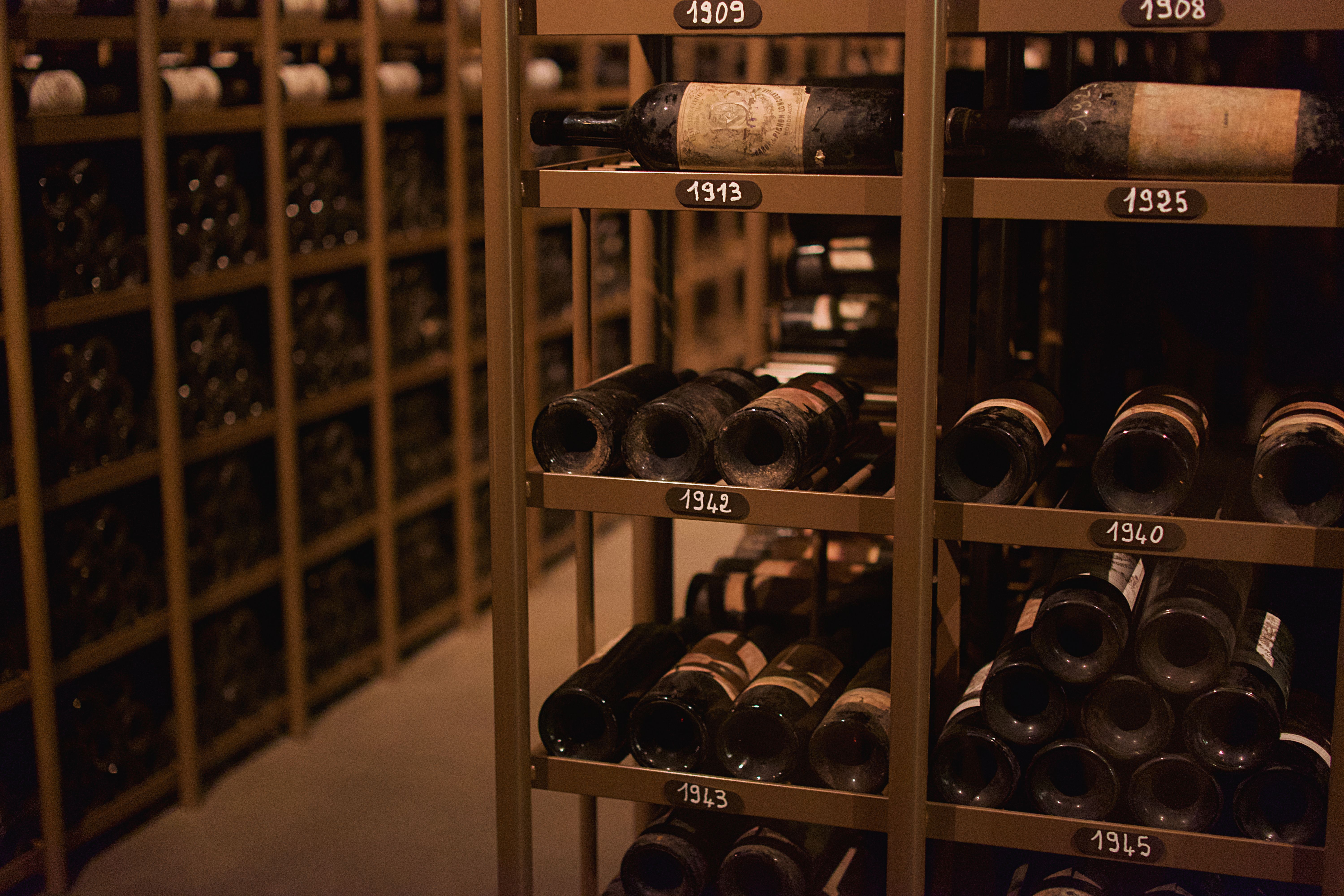
Oak barrels are, from an engineering perspective, a terrible way to store liquid. They're expensive, heavy, awkwardly shaped, difficult to clean, they leak, and they lose product to evaporation. Steel tanks are better in every practical respect.
And yet essentially every serious red wine and a lot of the best whites spend time in oak. That's not tradition alone. Barrels do several things that no other vessel does, and only one of them is flavour.
The flavour part
Let's deal with the obvious first. Oak contributes compounds directly to wine, and the specific ones are well characterised.
Vanillin gives vanilla. Lactones give coconut and woody notes, and they're much higher in American oak than French. Furfural and related compounds from toasting give caramel, toast and coffee. Guaiacol and related phenols give smoke and spice. Tannins from the wood add to the wine's own tannins.
How much of this ends up in the wine depends on several factors: whether the barrel is new or has been used before, the toast level applied when it was made, the size of the barrel, the origin of the wood, and how long the wine sits in it.
A new barrel gives a lot. After three or four uses, a barrel is essentially neutral in flavour terms and is being used for the other reasons.
The oxygen part, which matters more
Here's the effect that justifies the whole exercise. Oak is slightly porous, and barrels allow a very small, controlled amount of oxygen to reach the wine.
This is not the same as exposure to air. It's micro-oxygenation — tiny quantities over months, which triggers specific chemical changes.
The most important is tannin polymerisation. Young wine has short, aggressive tannin molecules that taste harsh and drying. Slow oxygen exposure causes these to link into longer chains, which are perceived as softer and rounder. That's why a wine that was astringent from the tank becomes approachable after a year in barrel.
Colour stabilisation is the other big one. Anthocyanins, the pigments in red wine, bind with tannins in the presence of oxygen to form more stable compounds. Without that, red wine colour fades much faster.
You can achieve some of this artificially with controlled oxygen dosing in a steel tank, and plenty of wineries do. It's cheaper, and most people who know both would say it isn't quite the same, though separating that judgement from expectation is genuinely hard.
The concentration part
Barrels lose liquid. Evaporation through the wood — the angels' share — runs at a few percent per year depending on cellar humidity.
The consequence is concentration. A wine that spends eighteen months in barrel comes out slightly more concentrated than it went in, which is a modest but real quality effect.
Winemakers top up barrels regularly to avoid excessive headspace, which offsets some of this, but the net effect remains.
Why the size matters so much
The critical variable is the ratio of wood surface to wine volume, and it scales badly.
A standard 225-litre barrique has a lot of surface area per litre. A 500-litre puncheon has considerably less. A 5000-litre foudre has very little indeed.
So a wine in a large old foudre is getting almost no oak flavour and only slight oxygen exposure — it's essentially a neutral vessel with gentle breathing. A wine in a new barrique is getting a great deal of both.
This is why the choice of vessel size is one of the most consequential decisions a winemaker makes, and why "aged in oak" on a label tells you almost nothing.
The cheap alternatives
Oak flavour can be added without barrels, and a lot of inexpensive wine does exactly this.
Oak chips or staves suspended in a steel tank contribute flavour compounds at a fraction of the cost. Oak powder does the same faster. Liquid oak extract exists.
These give you the flavour and none of the oxygen effects or the concentration. The result tends to taste of oak in a way that sits on top of the wine rather than being integrated into it — a slightly artificial vanilla note that doesn't quite belong.
There's nothing dishonest about this and it's not always disclosed. If a wine is under ten pounds and tastes strongly of vanilla and toast, it almost certainly hasn't seen a barrel.
The fashion cycle
Oak usage has swung considerably over the last thirty years. There was a period when heavily oaked wines scored extremely well with influential critics, which produced a lot of wines dominated by new wood.
The reaction against that has been substantial, and the current direction across most quality regions is towards less new oak, larger vessels, and longer, gentler ageing. Concrete eggs and amphorae have also come back into use, both offering some oxygen permeability without any flavour contribution.
My own view is that the reaction has been correct and has occasionally overshot — there are wines now that would benefit from a bit more structure than a neutral vessel provides. But if I have to choose between too much oak and too little, too little wins easily. Excessive oak is one of the few faults that gets worse rather than better with age.
What to notice
If you want to train yourself on this, buy the same grape variety from the same region at two price points and taste them together. The oak difference is usually the most obvious distinction and once you've isolated it you'll notice it everywhere.
Then decide how much you like it, because it's largely a preference rather than a quality question. Plenty of excellent wine sees no oak at all.